



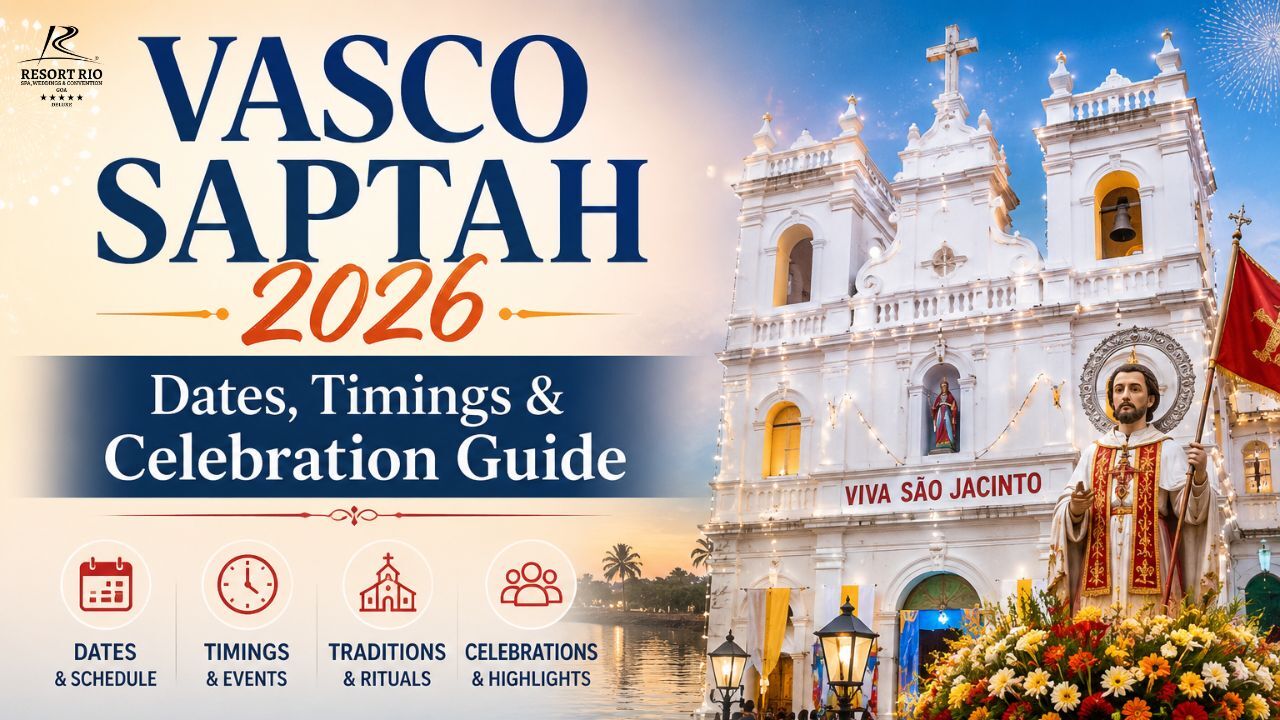
Every year, thousands of devotees and visitors gather in Vasco da Gama, Goa, for one of the state’s most respected religious fairs. Vasco Saptah 2026 will continue this long-standing tradition with seven days of prayers and a large community fair. The event is centred around the Shri Damodar Temple in Vasco and attracts people from different parts of Goa and neighbouring states. According to the Goa Tourism Department, Vasco Saptah is celebrated over seven days each August and attracts thousands of devotees to the Shri Damodar Temple and the surrounding fair.
This guide will cover the Vasco Saptah date and practical tips so you know what to expect before visiting.
Vasco Saptah 2026 Dates and Timings
The official festival calendar for Vasco Saptah 2026 is ready to follow its traditional schedule on 18th August 2026. Goa Tourism lists the festival as an annual event in August, and the temple generally releases the detailed programme closer to the celebration. Many travellers visiting the festival also choose to stay at the best resorts in North Goa for a comfortable and convenient experience.
| Event | Details |
| Festival | Vasco Saptah 2026 |
| Start Date | 18th August 2026 |
| Duration | Seven consecutive days |
| Main Venue | Shri Damodar Temple, Vasco da Gama, Goa |
| Main Activities | Bhajans, kirtans, temple rituals, religious discourses, community fair |
| Best Time to Visit | Evening, when devotional programmes and the fair are most active |
Most temple activities begin in the morning with prayers and continue until late evening. Bhajan sessions and cultural programmes usually draw the largest crowds after sunset.
What is Vasco Saptah?
The word “Saptah” means “seven days.” During the festival, devotees gather for seven continuous days of worship dedicated to Lord Damodar. The temple remains busy throughout the day with religious activities, while the surrounding streets host a large fair.
The celebration is known for:
- Continuous devotional singing
- Daily temple rituals
- Religious discourses
- Community participation
- Food stalls and local shopping
- Traditional household goods and toy stalls
The fair often continues for several days even after the main religious programme ends.
Also read: Goa in August: Everything You Need to Know Before You Visit
History of Vasco Saptah
The history of Vasco Saptah is closely linked with the worship of Lord Damodar by the Hindu community in Vasco da Gama, and the festival has been observed for decades at the Shri Damodar Temple and has become one of the city’s most recognised annual religious events.
Unlike Goa’s beach festivals, Vasco Saptah focuses on devotion and community participation, and families attend prayers together, while many local volunteers help organise the event every year.
The celebration has also grown into an important social gathering where local businesses and artisans participate in the fair alongside the religious programmes.
Today, the history of Vasco Saptah reflects how traditional temple customs have remained active even as Vasco has developed into one of Goa’s major port cities.
How Vasco Saptah is Celebrated
Each day follows a structured religious schedule.
Morning activities usually include:
- Temple prayers
- Special pujas
- Reading of religious texts
During the afternoon:
- Devotional gatherings
- Community visits
- Temple offerings
Evening celebrations include:
- Bhajans
- Kirtans
- Spiritual talks
- Cultural programmes
- Busy fairground activities
Many devotees attend every evening throughout the seven-day celebration. Visitors also spend time exploring the stalls selling clothing and local snacks.
Guests staying at Resort Rio often include a day trip to Vasco while exploring different cultural events across Goa during the festival season.
Why Vasco Saptah is Important
This festival is important because it brings together faith and local traditions.
It helps preserve:
- Traditional devotional music
- Temple customs
- Local trade
- Community participation
- Family gatherings
Many Goans consider the festival a yearly tradition and plan visits with relatives who return home during August. Unlike many commercial events, this celebration continues to maintain its religious identity.
Visitor Tips
If you plan to attend, these tips can help.
- Visit during the evening for the busiest programmes.
- Wear modest clothing suitable for a temple visit.
- Remove footwear before entering temple areas.
- Carry cash for small purchases at the fair.
- Arrive early if visiting during weekends.
- Stay hydrated, as August weather can be warm and humid.
Photography is generally allowed around the fair. But always respect temple rules inside prayer areas.
Vasco Saptah Among Goa’s Festivals
Many visitors know Goa for Carnival or beach events, but religious celebrations remain equally important. Here is how Vasco Saptah compares with other major festivals.
| Festival | Main Focus | Typical Month |
| Vasco Saptah | Lord Damodar worship and devotional programmes | August |
| Shigmo | Folk dances and cultural parades | March |
| São João | Monsoon celebration | June |
| Ganesh Chaturthi | Family worship and community celebrations | August or September |
This variety is one reason the Goa festival calendar attracts visitors throughout the year. People interested in local traditions often combine Goa festival 2026 planning with temple visits, cultural events, and heritage sites instead of only beach tourism.
Related read: Is Goa Worth Visiting During the Monsoon? A Complete Guide
Why You Should Include Vasco Saptah in Your Goa Visit
The festival gives you a different view of Goa. Instead of beaches, you see temple traditions and a lively local fair.
The event also offers an opportunity to understand why this remains a famous Goa festival for many residents. It reflects local faith and neighbourhood participation rather than large commercial entertainment.
Travellers who enjoy cultural tourism often include this celebration while planning a Goa festival 2026 itinerary because it offers something different from Goa’s better-known seasonal events.
Visitors staying at Resort Rio can easily add Vasco to their sightseeing plans and explore one of the state’s most respected religious celebrations along with other cultural attractions.
Conclusion
Vasco Saptah 2026 continues to be one of the most respected religious celebrations in Goa. From temple rituals and devotional music to the lively community fair, it offers a meaningful look at local traditions that have continued for generations. Whether you are interested in faith, or regional celebrations, this Goa-famous festival remains an important part of Goa’s cultural calendar, and visitors staying at Resort Rio can also include the festival as part of a wider trip to explore Goa beyond its beaches.
FAQs
1. What is the Vasco Saptah date in 2026?
The detailed temple schedule begins on 18th August, 2026. Goa Tourism lists Vasco Saptah as an annual festival held during August.
2. Where is Vasco Saptah celebrated?
The festival takes place at the Shri Damodar Temple in Vasco da Gama, Goa, with the surrounding streets hosting a large fair.
3. Why is Vasco Saptah considered an important Goa festival?
It combines seven days of religious worship and a community fair. It is one of the well-known cultural and religious celebrations in Goa.
4. Is Vasco Saptah suitable for tourists?
Yes. Visitors are welcome to attend the fair and temple surroundings while respecting temple customs and prayer timings.
