



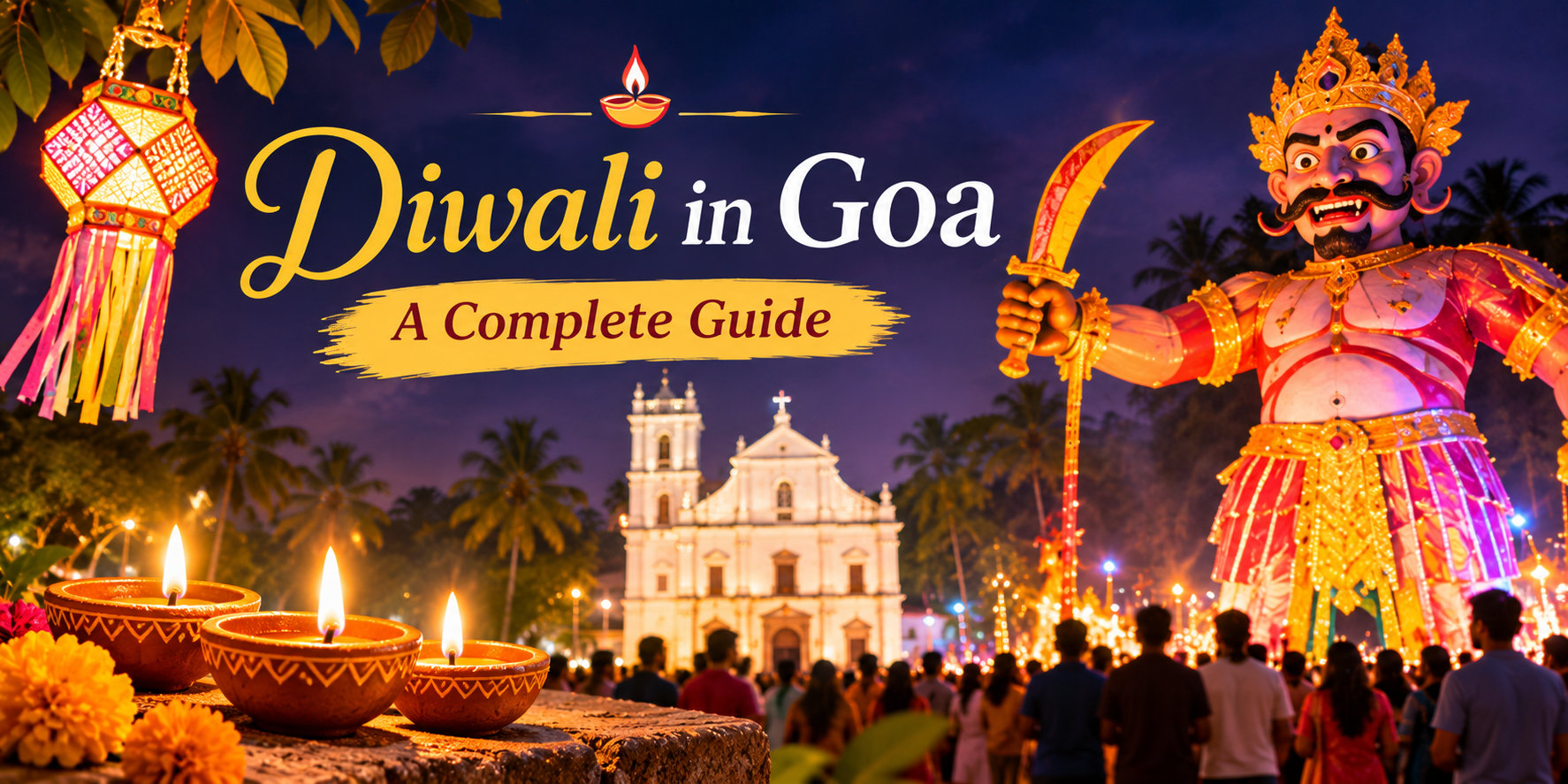
Diwali is a special time in Goa. Homes glow with oil lamps, shops display colourful lanterns, and families prepare sweets. But one local custom draws the most attention. On the night before Diwali, people gather to see large figures of Narkasur. These figures are burnt before dawn to mark the victory of good over evil.
In 2026, Diwali falls on Sunday, 8 November. The main Narkasur events are expected to take place on the night of 7 November. Many may continue into the early hours of the next day. Timings can vary from one area to another, so check local updates before you leave. Goa during Diwali offers a chance to see these local customs up close.
You can spend the day at a temple, shop at a local market or relax by the sea. In the evening, you can watch the local celebrations. Here is how you can plan your visit.
Goa celebrates several cultural and religious festivals throughout the year. Explore our guide to Goa festivals from September to December to discover more events worth including in your travel plans.
What Makes Diwali in Goa Special?
The Narkasur tradition is a key part of Diwali in Goa. Hindu tales tell of a demon king named Narakasura. He caused great suffering before Lord Krishna defeated him. His death came to mark the victory of good over evil.
In Goa, people mark this tale by making large figures of the demon. Local groups often use bamboo, paper, cloth and paint to build them. Some figures have large faces, bright colours and moving parts.
The work often starts days before the festival. Young people and local groups join in to build and decorate the figures. Some areas also hold contests to judge their size and design.
People gather at night to see the displays. In some places, the figures are burnt before sunrise. This marks the end of the Narkasur event and the start of Diwali morning rituals.
Planning a November getaway? Explore our guide to Goa in November for seasonal travel tips, festivals, weather and things to do during your visit.
Goa Diwali Traditions You Should Know
Goa has several customs linked to the festival. You may see these in homes, temples and local streets.
1. Narkasur Figures and Night Events
The Narkasur displays are a major part of Goa during Diwali. Local groups place their figures in open spaces and at road junctions. You may see several displays in one evening, mainly in larger towns.
Each group has its own design. Some figures have detailed faces and costumes. Others are tall and use bright colours. A few may be placed on vehicles for public display.
Large crowds often gather near popular sites. Some roads may close for a short time. Traffic can also move slowly. Walking between nearby displays may save you time.
Goa’s celebrations also reflect its rich cultural history and local customs. Read more about Goa’s cultural heritage to discover the traditions and historical influences that shape the state.
2. Early-Morning Oil Baths
Many Hindu families take an early bath on Naraka Chaturdashi. This ritual is called Abhyanga Snan. It often starts with an oil massage before the bath.
Some families also use utne, a paste made from herbs and other natural items. The ritual marks a fresh start for the day.
Customs can differ from one home to another. You may see small changes in how families follow this practice.
3. The Karit Fruit Ritual
Some families in Goa crush a small, bitter fruit called karit underfoot. This act recalls the defeat of Narakasura. In some homes, people also taste a little of the fruit’s juice. Not every family follows this custom. Still, it is one of the local practices linked to the festival.
4. Diyas, Lanterns and Rangoli
Many homes and shops use earthen lamps to mark Diwali. Families also hang paper lanterns called akash kandils near doors and windows.
If you are planning a private festive gathering with family or friends, explore event venues in Goa for spaces suited to special occasions and celebrations.
Rangoli is another common sight. People make colourful patterns near their entrances with coloured powder and other materials. These designs welcome guests and add colour to the home.
After sunset, the lamps and lanterns light up streets and doorways. You can see these decorations while walking through local areas.
5. Prayers, Sweets and Family Meals
There can be prayers done for Goddess Lakshmi and gift exchanging along with sharing of sweets. Shop owners also conduct prayers for good business and prosperity.
Food forms an important part of the Diwali festival celebrated in Goa. One of the popular foods is Fov that is flattened rice. This can be made both sweet and savory and some popular recipes include coconut, jaggery and milk.
You can also get some local sweets and snacks from the market. Always ask for the ingredients used in their preparation, especially if you have food allergies.
Places to Visit During Diwali in Goa
You can plan your visit around local events, temples, markets or beaches. These places offer different ways to spend the festival.
1. Panaji
Panaji is a good place to start. The city and its nearby areas are known for Narkasur displays. Mala, Bhatlem and Taleigao are among the areas linked to these events.
During the day, walk through the older parts of the city. You can see buildings from the Portuguese era and visit Fontainhas, which is known for its colourful houses and narrow lanes.
In the evening, head to local display sites. Plan your route before leaving, as crowds and road closures may slow you down.
If you have more time for sightseeing, explore our guide to the top places to visit in Goa for additional destinations to include in your itinerary.
2. Margao
Margao is a useful base for a trip to South Goa. Its busy streets and markets give you a look at daily life in the region.
Local groups may set up Narkasur figures in nearby areas during the festival. Ask local residents about the display sites and timings. This can help you plan your evening. You can also shop for lamps, lanterns, sweets and other festive items at local markets.
3. Mapusa
Mapusa is known for its markets and connections to villages in North Goa. This is an ideal location for purchasing local items before the festival.
Find earthen lamps, paper lanterns, flowers, and ingredients that can be used for cooking during Diwali. The operating time of markets may differ during the holiday period; therefore, you need to find out when they are open. Ask the shopkeepers about the local culture and food that is available during Diwali.
4. Ponda and Its Temples
This town will suit visitors who are interested in Hindu temples. The region includes such temples as Shri Mangueshi Temple and Shri Shantadurga Temple.
You will be able to spend some time visiting these places and learning about their traditions. It is necessary to wear conservative clothes and follow all the requirements of the temples.
Temple hours may change during festivals. Check the timings before you set out.
5. Baga and the North Goa Coast
It will be better to choose the place to spend holidays by the sea. You have an opportunity to visit beaches in the daytime and take part in local Diwali celebrations in the evening.
There are shops and restaurants near the selected place. However, opening hours may vary on the day of the celebration. Therefore, you should find out about this information before leaving your accommodation.
Be prepared to carefully plan your movements in case you wish to participate in a Narkasur event after sunset. The distance from the beach to the location of the event will play a role in your plan.
You can also compare some of the best beaches in Goa to find the right coastal spots for your holiday.
6. Sankhali for Tripurari Poornima
If you plan to stay in Goa in the second half of November, you can visit Sankhali because Tripurari Poornima is another celebration which is associated with Lord Shiva’s victory over Tripurasura.
During the event, there are temple prayer services, lighting and boats’ show near the Valvanti river. In 2026, this event is scheduled for 24 November.
Please note that the event is not held on Diwali day.
What to Eat During Diwali in Goa
Food is one easy way to get acquainted with local traditions. Try fov, which is rice flattened during the festival. Sweets are made using ingredients like coconut and jaggery. Fov may also have spicy or vegetable varieties.
Locals may be selling sweets and snacks in the market areas. They would differ from place to place because most families prepare their own special dishes.
You could visit a local restaurant to try Goan dishes made from rice, coconut and local spices. Make sure to check if there are any vegetarian dishes available since you don’t eat meat.
Want to discover more local flavours during your festive getaway? Explore our guide to the best Goan dishes to try in 2026 for more food inspiration.
Travel Tips for Diwali 2026
A few tips will help you plan your stay at Goa and enjoy the festival with minimum stress. Keep these points in mind to make the most of the Diwali celebrations in Goa.
- Book your accommodation in advance. Choose the location that suits your plans and check the time of travel to the destinations.
- Go to events early. Narkasur display events tend to be very popular.
- Check traffic news in advance. There may be roads closed to traffic.
- Keep a safe distance. Stay away from burning figures and fireworks. Follow the advice of local staff and police.
- Respect local customs. Ask before taking close-up photos of people during prayers.
- Carry water. You may spend several hours outdoors, even late at night.
- Check opening hours. Shops, temples and other places may change their timings for the holiday.
- Plan your return. Arrange transport in advance if you expect to stay out until dawn.
Check official tourism updates and local notices for confirmed event details. Do not rely on last year’s schedule, as timings may change.
Before leaving for your trip, check our Goa travel checklist for 2026 to make sure you have everything you need for a comfortable holiday.
Conclusion
Diwali allows you to witness more of Goa apart from the beaches. Narakasur displays, temple visits, markets, and festive foods are some activities you can do. Be sure to schedule your evenings properly and leave enough time to experience the town on your own terms.
If you plan to spend time in North Goa, Resort Rio in Arpora, is a great place to be in during Diwali. The resort is in close proximity to beaches, shops, and other places of interest. Book Now!
