



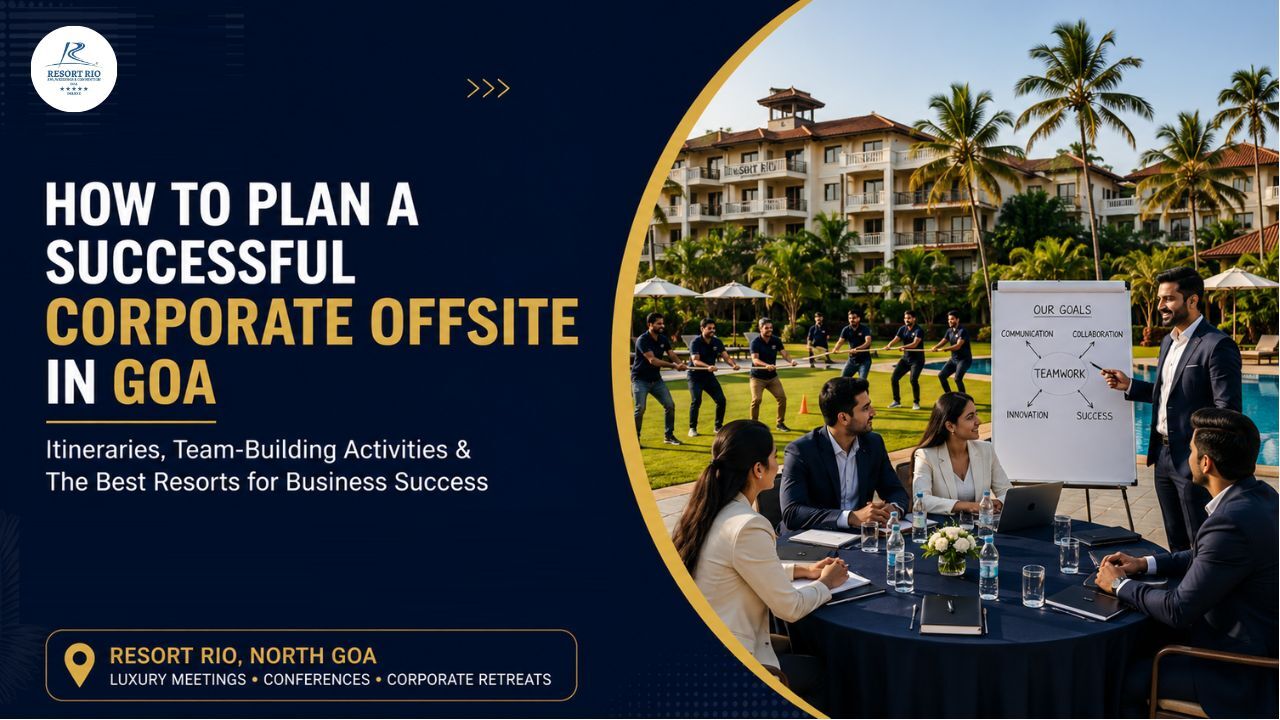
Corporate offsites are becoming a bigger part of workforce planning in 2026. Companies are investing in structured retreats that improve collaboration and employee engagement. According to the Global Business Travel Association (GBTA), global business travel spending is projected to reach US$1.69 trillion in 2026, reflecting continued growth in corporate events.
For HR managers and corporate planners, the focus is no longer limited to meeting rooms. Also, well-planned itineraries now promote practical team-building activities. Corporate team-building resorts Goa remain a preferred choice for measurable offsite outcomes. In this article, we will discuss itinerary planning, team-building activities, and resort selection for corporate offsites in North Goa.
Why North Goa Works for Corporate Offsites
North Goa offers a practical setting for corporate offsites. Good connectivity, well-developed hospitality infrastructure, and activity-friendly spaces make planning easier for HR teams and event organizers. Teams can move between meetings and activities without spending too much time on travel.
Many companies choose corporate offsite venues in North Goa because they provide accommodation and activity areas within a single property.
Key advantages include:
- Direct connectivity from major Indian cities
- Dedicated conference and breakout spaces
- Outdoor areas for team activities
- Professional event support services
- Accommodation for different group sizes
These advantages help create structured itineraries that balance team engagement throughout the offsite.
What Makes a Team-Building Itinerary Effective?
An offsite itinerary should support clear business goals. Activities should strengthen communication or collaboration among teams. Sessions that lack purpose often deliver limited long-term value.
The most effective programs link activities to measurable outcomes, helping HR managers assess offsite value.
| Business Objective | Recommended Activity Type | Expected Outcome |
| Improve communication | Team problem-solving challenges | Better information sharing |
| Build leadership skills | Leadership rotation exercises | Improved decision-making confidence |
| Increase collaboration | Cross-functional workshop | Stronger interdepartmental relationships |
| Encourage innovation | Business simulation exercises | More creative thinking |
| Improve engagement | Recognition and appreciation sessions | Higher employee morale |
| Strengthen trust | Outdoor team challenges | Better team cohesion |
Many corporate team-building resorts in Goa now structure activity schedules around these outcomes instead of offering generic recreational programs.
Sample 3-Day Corporate Offsite Itinerary in North Goa
A well-planned itinerary balances business priorities with team interaction. Employees should have enough time for structured learning and informal networking, and the goal is to maintain momentum throughout the program without creating schedule fatigue.
Below is a practical three-day format that many organizations use successfully.
Day 1: Alignment and Team Connection
The first day sets the direction for the entire offsite. Employees need clarity on business goals before participating in activities. Early alignment helps teams understand the purpose and expected outcomes of the offsite.
To establish that foundation, consider the following structure:
- Arrival and check-in
- Welcome briefing
- Leadership town hall
- Cross-functional networking lunch
- Team introduction activities
- Evening networking dinner
These sessions create familiarity among participants before more intensive activities begin. The first day helps break down departmental barriers and encourages team connections.
Strengthen team connections over a delicious buffet in Goa, perfect for networking dinners and corporate celebrations.
Day 2: Collaboration and Leadership Development
The second day should focus on practical teamwork. This is usually the most active part of the itinerary and often delivers the strongest engagement levels. Activities should challenge employees to communicate and make decisions together.
Here’s one effective way to structure the day:
- Beach-based team challenges
- Leadership rotation exercises
- Business simulation activities
- Innovation workshops
- Team presentations
- Evening recognition program
These activities create situations where employees must work with colleagues outside their usual teams. New communication patterns often emerge during these sessions.
Day 3: Reflection and Action Planning
The final day should focus on converting ideas into practical next steps. Without follow-up planning, many insights generated during an offsite can quickly lose momentum. But, a structured closing agenda helps teams leave with clear commitments.
The following format works well:
- Wellness or reflection session
- Department planning workshops
- Action-item development
- Leadership feedback session
- Closing remarks
- Departure
These sessions help participants connect the offsite to their day-to-day responsibilities. Teams leave with defined priorities and ownership assignments. This makes the event more valuable than a simple break from routine work.
Give your team time to recharge at the best spa in Goa, where wellness experiences help improve focus and productivity after a busy day.
Team-Building Activities That Deliver Strong Results
The best team-building activities create measurable workplace benefits. They encourage employees to think differently and solve challenges together. Activities should be selected based on organizational goals rather than popularity alone.
The following formats consistently deliver useful outcomes for corporate groups.
1. Business Simulation Challenges
Business simulations place participants in realistic decision-making situations. Teams must analyze information and respond to changing conditions. These exercises often reveal strengths that remain hidden during normal work routines.
One effective format includes:
- Market competition simulations
- Resource allocation exercises
- Crisis management scenarios
- Strategic planning challenges
Participants learn how their decisions affect broader outcomes. Teams also gain a better understanding of how different departments contribute to organizational success. This makes simulations particularly useful for leadership development programs.
2. Strategic Treasure Hunts
Modern treasure hunts are designed around problem-solving rather than recreation alone. Teams work through clues and make decisions under time limits. This creates an environment where communication becomes essential.
Common elements include:
- Location-based challenges
- Team problem-solving tasks
- Time-sensitive checkpoints
- Collaborative scoring systems
These activities encourage participants to share information quickly and efficiently. They also create opportunities for natural leadership to emerge. Many group activities in luxury resorts can be customized to include company-specific themes and objectives.
3. Innovation Workshops
Innovation sessions help employees address real business issues. Participants work in small groups and develop solutions to existing challenges. The focus remains practical and relevant to organizational priorities.
A typical workshop may include:
- Customer experience improvements
- Process efficiency discussions
- New product concepts
- Internal communication ideas
Employees often provide valuable perspectives when placed in mixed teams. Cross-functional participation encourages fresh ideas, making innovation workshops a valuable addition to any business retreat or itinerary.
How HR Managers Can Measure Offsite Success
Measuring success should start before the event begins. Many organizations collect feedback immediately after an offsite but fail to establish a baseline beforehand. This makes it difficult to determine whether the program produced meaningful improvements.
A structured measurement framework helps HR teams connect offsite activities to business outcomes.
-
Track Participation During the Event
Participation levels often reveal how engaged employees are with the program. High attendance alone does not guarantee success. The quality of involvement matters just as much as the number of participants.
To monitor engagement throughout the offsite, consider tracking:
- Activity participation rates
- Team discussion involvement
- Cross-functional interaction levels
- Workshop attendance
- Question-and-answer participation
These indicators help planners identify which sessions generated the strongest interest. They can also highlight activities that may need adjustment in future programs. This information becomes valuable when refining future itineraries at corporate team building resorts Goa.
-
Evaluate Post-Offsite Business Impact
The most important results often appear after employees return to work. Teams may communicate more effectively, complete projects faster, or demonstrate stronger cross-departmental collaboration. These changes should be measured systematically.
Useful post-event metrics include:
- Employee feedback survey results
- Cross-team project participation
- Retention indicators
- Manager feedback
- Team productivity measures
A 2026 corporate retreat trends report found that over 70% of medium and large organizations conduct annual offsite programs, reflecting growing recognition of their role in team engagement and organizational performance.
When measured properly, offsites become strategic business investments rather than standalone events. This approach helps planners focus on outcomes rather than activity volume.
Choosing the Right Resort for Your Corporate Offsite
The venue directly impacts the quality of your itinerary. A resort may look attractive online but still lack the facilities required for productive corporate programs. Selecting the right property requires evaluating operational requirements first.
The following factors deserve careful attention during the selection process.
-
Meeting and Conference Infrastructure
Business sessions remain a core part of any offsite. Teams need reliable facilities that support presentations, workshops, and group discussions. Technical problems can disrupt schedules and reduce productivity.
Review the following before making a decision:
- Conference hall capacity
- Breakout room availability
- Audio-visual equipment
- Internet reliability
- Technical support services
Strong meeting infrastructure supports smooth event execution and parallel sessions. Many corporate offsite venues in North Goa are designed for these needs.
Host productive business sessions in a modern conference hall in Goa equipped for meetings of every scale.
-
Outdoor Activity Areas
The quality of outdoor space affects the range of activities available during the program. Large open areas allow planners to conduct structured challenges without disrupting other resort operations. This becomes particularly important for larger groups.
When assessing outdoor facilities, review:
- Lawn size
- Beach access
- Activity zones
- Safety arrangements
- Weather contingency options
Dedicated outdoor areas help teams move efficiently between activities. They also provide flexibility when schedules need adjustment. Resort Rio is often chosen for its accommodation, meeting, and event facilities.
-
Accommodation and Group Capacity
Comfortable accommodation contributes to participant satisfaction. Long travel days and packed schedules can affect engagement if room arrangements are inadequate. Capacity planning should therefore be part of the venue evaluation process.
Key considerations include:
- Number of available rooms
- Room categories
- Group allocation options
- Check-in efficiency
- Accessibility features
Accommodation planning becomes particularly important for multi-day events. A smooth stay allows participants to remain focused on program activities. It also reduces administrative issues during the event.
Also read: 15 Things to Do in Goa During the Monsoon Season
Common Planning Mistakes to Avoid
Even well-funded offsites can miss their goals due to planning mistakes. Most issues result from poor structure rather than limited resources. Avoiding common errors helps maximize event value.
The following issues appear frequently in corporate programs.
-
Overloading the Schedule
Many planners try to fit too many sessions into a limited timeframe. Participants move from one activity to another without enough time to absorb information. This often leads to lower engagement levels by the second day.
Watch for signs such as:
- Consecutive sessions without breaks
- Long meeting blocks
- Limited networking time
- Minimal reflection periods
A balanced schedule typically produces stronger outcomes. Employees need time to process ideas and build relationships between activities. Small breaks often improve participation more than additional sessions.
-
Selecting Activities Without Clear Objectives
Activities should support a defined business purpose. Choosing sessions solely because they are popular can reduce the overall impact of the program. Every activity should connect to a measurable outcome.
Before finalizing activities, define:
- Desired behavioural outcomes
- Team development goals
- Leadership objectives
- Collaboration targets
Clear objectives help participants understand why they are taking part. They also make evaluation easier after the event. This creates stronger alignment between activities and organizational priorities.
-
Keeping Departments Separate
Many organizations unintentionally group employees according to existing reporting structures. This limits opportunities for new connections and fresh perspectives. Offsites should encourage interaction beyond normal workplace relationships.
Avoid this by mixing participants during:
- Team challenges
- Dining arrangements
- Workshop groups
- Discussion sessions
Cross-functional interaction often produces some of the most valuable outcomes from an offsite. Employees gain a broader understanding of how different teams operate. This can improve collaboration long after the event ends.
Whether you’re planning a business retreat today or a resort in Goa for wedding celebration tomorrow, Resort Rio offers world-class venues for every occasion.
Conclusion
A successful corporate offsite requires more than a venue and a schedule. It requires a clear itinerary that supports collaboration and action planning. North Goa offers the infrastructure, and activity options needed to create productive programs for modern teams. By selecting the right activities and avoiding common planning mistakes, HR managers can create events that deliver lasting business value. Resort Rio can support these objectives through integrated meeting and activity facilities.
FAQs
1. How far in advance should a corporate offsite in North Goa be planned?
For groups of 50 or more participants, planning should ideally begin three to six months in advance. This allows enough time to secure venues and transportation arrangements.
2. What is the ideal duration for a corporate offsite?
A three-day, two-night format is commonly used because it provides sufficient time for meetings and action planning without taking employees away from work for too long.
3. Which team-building activities provide the best business outcomes?
Business simulations, leadership exercises, and strategic problem-solving challenges often produce stronger workplace results than purely recreational activities.
4. Why are corporate team building resorts in Goa popular for company retreats?
They allow organizations to host meetings, provide accommodation, offer dining, and host structured activities in a single location.
