



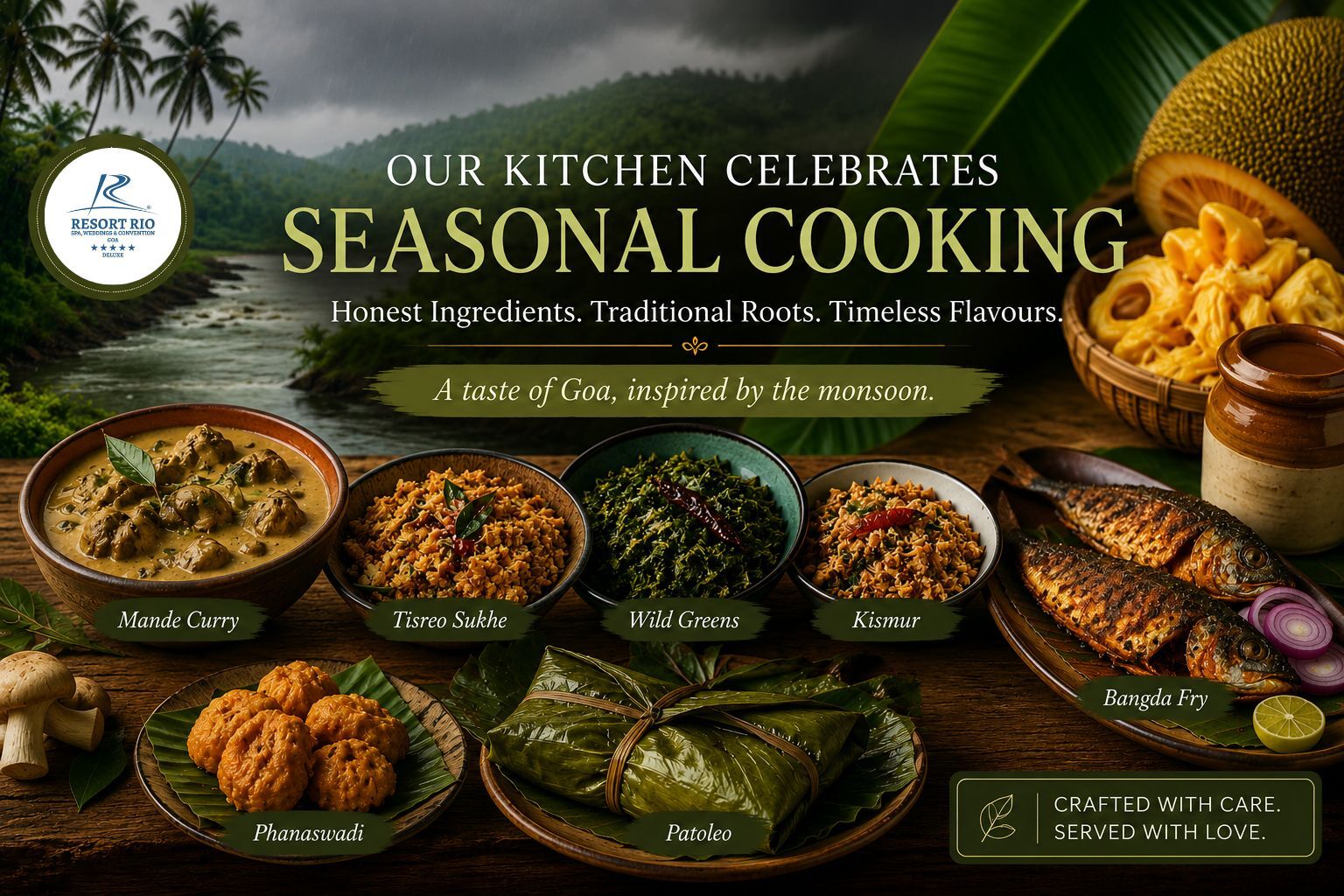
The first spell of rain changes Goa in ways that go far beyond the weather. The beaches grow quieter, the rivers fill, the hills turn green, and the food on local tables changes with the season. Families begin cooking recipes that wait all year for fresh rain-fed ingredients. Some dishes appear for only a few weeks before disappearing until the next monsoon. According to the Goa Tourism Development Corporation, the monsoon season offers visitors a chance to enjoy Goa’s rich culture, local traditions, and seasonal cuisine beyond its famous beaches. That is exactly what makes this time of year so memorable.
At Resort Rio, we love this side of Goa because it reflects the rhythm of local life. Our vegetarian restaurant in Goa takes inspiration from traditional Goan homes where recipes follow the season instead of the calendar. Every ingredient has its time, and the monsoon brings some of the state’s most loved flavours to the table.
In this blog, we are sharing the dishes that define Goa’s rainy months and why they deserve a place on every food lover’s list.
Why Monsoon Changes the Goan Kitchen
Many visitors know Goa through fish curry rice, vindaloo, xacuti, and cafreal. Those classics remain favourites throughout the year. The monsoon, however, introduces a completely different menu.
Heavy rain affects farming, fishing, and foraging across the state. In Goa during monsoon:
- Deep-sea trawling slows during the fishing ban.
- Rivers and estuaries provide fresh seasonal catch.
- Forests produce wild mushrooms.
- Paddy fields fill with edible greens.
- Jackfruit reaches its best quality.
- Turmeric plants grow fresh leaves used in traditional sweets.
Goan families have followed this seasonal cycle for generations. Instead of replacing everyday meals, these dishes become part of a special menu that belongs only to the rains.
Specialities of Goa Monsoon Season
| Seasonal Dish | Main Ingredient | Why It Is Special During Monsoon |
| Mande Curry | Wild mushrooms | Available only after heavy rainfall |
| Tisreo Sukhe | Local clams | Fresh river and estuary harvest |
| Mhadi Bhaji or Taikilo | Wild greens and ferns | Naturally grow around paddy fields |
| Kismur | Dried fish or prawns | Traditionally eaten during fishing restrictions |
| Bangda Fry | Fresh mackerel | Local small-boat catch has a different seasonal taste |
| Phanaswadi | Jackfruit | Fresh jackfruit peaks around the start of the rains |
| Patoleo | Rice flour, jaggery, turmeric leaves | Made during Nag Panchami with fresh turmeric leaves |
Treat yourself to a premium buffet in Goa with an irresistible selection of local and global cuisines.
Our Kitchen Celebrates Seasonal Cooking
At Resort Rio, our chefs enjoy working with ingredients that reflect Goa’s changing seasons. The Goa weather inspires comforting meals that bring together traditional cooking methods and local produce.
Many of these recipes have been passed through generations in Goan households. They are simple, honest, and built around ingredients at their freshest. That approach allows every dish to keep its original character without unnecessary additions.
The rainy season reminds us that great food often begins with patience. Nature decides the menu first, and the kitchen follows:
1. Mande Curry Brings The Forest To The Plate
After the first strong rains, wild mushrooms begin appearing across Goa’s forest areas, especially around Sanguem, Canacona, and nearby villages. Local families know exactly where these mushrooms grow because the same spots produce them every year.
These mushrooms, known locally as mande, cannot be farmed like ordinary mushrooms. They appear naturally and remain available for only a few weeks.
Why locals wait all year for it
The curry keeps the preparation simple. Fresh coconut, local spices, and carefully cleaned mushrooms come together to create a rich, earthy flavour. The mushrooms remain the centre of the dish rather than getting hidden under heavy seasoning. Many Goans consider this one of the first true signs that the monsoon has arrived.
Related read: Goa in June 2026: Weather, Things to Do & Travel Guide
2. Tisreo Sukhe Shows A Different Side Of Seafood
Clams are an important part of Goan coastal cuisine, and seasonal harvesting contributes to dishes such as Tisreo Sukhe. Women from local communities often collect clams by hand from shallow mudflats along rivers like the Zuari and Sal. Their knowledge of tides and riverbeds has supported this tradition for many years.
Tisreo Sukhe uses:
- Fresh local clams
- Grated coconut
- Onion
- Turmeric
- Green or red chillies
The finished dish tastes fresh, lightly sweet, and full of natural flavour. Many families enjoy it with steamed rice, while others serve it as a snack during afternoon gatherings.
3. Wild Greens Become The Season’s Hidden Favourite
The monsoon encourages several edible greens to grow naturally around farms and village pathways. These plants are not cultivated in large quantities. They simply appear after steady rain.
Popular varieties include:
- Taikilo
- Madi Bhaji
- Ranbhaji
Older generations recognise these greens almost instantly. Many younger visitors see them for the first time during a monsoon meal.
Simple cooking keeps the flavours alive.
Most recipes need only garlic, coconut, mild spices, and a little oil. The result feels fresh, slightly earthy, and pleasantly bitter. These vegetables remind us that seasonal food does not always need expensive ingredients to leave a lasting impression.
Plan your monsoon getaway at Resort Rio, one of the best resorts in Goa, where luxury stays and authentic seasonal dining create an unforgettable holiday.
4. Kismur Reflects The Rhythm Of Coastal Life
Goan kitchens have always planned ahead for the rainy season. Before the fishing ban begins, many families prepare dried fish and dried prawns for later use. This tradition allows households to continue enjoying seafood even when rough seas limit commercial fishing.
Kismur combines:
- Dried fish or prawns
- Fresh onion
- Coconut
- Chillies
- Lime
It delivers bold flavours with very little cooking. Every bite reflects the practical wisdom that shaped coastal cooking long before refrigeration became common.
To understand how Goa’s fishing communities have shaped the state’s culinary traditions, read our guide on Fishing in Goa: A Complete Guide to Coastal Experience.
5. Bangda Fry Tastes Different During The Rains
Fresh fish never completely disappears from Goa during the monsoon. While commercial trawlers remain ashore for part of the season, traditional fishermen continue working with country boats in rivers, estuaries, and coastal waters.
Many Goan cooks believe monsoon bangda, or mackerel, develops a sweeter taste because of changing water conditions. The preparation stays wonderfully simple.
Fresh fish receives a coating of spices before it goes into the pan. Some households also prepare recheado-stuffed bangda, where spicy masala fills the fish before cooking. At Resort Rio, seasonal seafood remains one of the highlights of our rainy-season dining.
6. Jackfruit Brings Sweet And Savoury Comfort
Jackfruit reaches its finest quality around the beginning of the monsoon. Nothing goes to waste. Raw jackfruit becomes part of savoury vegetable dishes, while ripe fruit appears in desserts and snacks loved across Goa. One favourite is Phanaswadi.
These soft fritters combine:
- Ripe jackfruit
- Rice flour
- Jaggery
- Coconut
The batter turns golden during frying and fills the kitchen with a warm aroma that many Goans associate with rainy afternoons.
7. Patoleo Marks One Of Goa’s Favourite Monsoon Traditions
Patoleo holds a special place in Goan homes during Nag Panchami. Fresh turmeric leaves wrap a filling made from jaggery and coconut inside soft rice flour dough. The parcels are then steamed until the leaves release their natural aroma.
The fragrance cannot be copied with any substitute. Fresh turmeric leaves grow to the right size only during the monsoon, making this sweet completely seasonal.
Shared across communities
Hindu and Catholic families prepare their own versions of Patoleo. Small differences appear in recipes, but the heart of the tradition remains the same. Every household adds its own personal touch while keeping the original method alive.
Also read: The Ultimate 7-Day North Goa Holiday Itinerary
Why Seasonal Food Matters
Seasonal cooking does more than create fresh flavours.
It also supports:
- Local farmers
- Village foragers
- Traditional fishing communities
- Small producers
- Regional food heritage
Each seasonal ingredient carries knowledge passed down through generations. Cooking these dishes helps preserve that knowledge while giving visitors a genuine taste of Goa beyond its popular tourist Goa beaches and routes.
Enjoy The Taste Of Monsoon At Resort Rio
Goa monsoon season invites guests to slow down and enjoy food with fresh eyes. At Resort Rio, we celebrate this part of Goa by bringing seasonal inspiration into our kitchen while staying true to local traditions. Our chefs work with fresh local produce whenever the season allows and prepare meals that reflect the warmth of Goan hospitality.
A monsoon stay becomes more than comfortable accommodation. It becomes a chance to sit down over a meal, enjoy fresh seasonal ingredients, and appreciate recipes that have remained part of Goan homes for generations. From comforting curries to traditional sweets, every plate reflects the season outside.
Conclusion
Goa during the monsoon offers a completely different food culture from the one many visitors expect. Forest mushrooms replace everyday vegetables. Fresh greens appear beside village fields. Clams come from rain-filled rivers. Jackfruit fills home kitchens, while Patoleo arrives with family celebrations. These dishes exist because the season makes them possible. Once the rains pass, many of them disappear until the following year.
Resort Rio welcomes guests who want to enjoy this quieter side of Goa through our vegetarian restaurant in Goa inspired by local traditions and seasonal ingredients. Plan your monsoon escape in luxury with Resort Rio and savour the flavours that arrive only when the rains do!
Frequently Asked Questions
1. What makes Goan monsoon food different from food served during the rest of the year?
Monsoon food depends on ingredients that naturally appear during the rainy months, including wild mushrooms, fresh turmeric leaves, seasonal greens, clams, and jackfruit. Many recipes cannot be prepared once these ingredients are no longer available.
2. Can I find these dishes in every restaurant in Goa?
Not always. Several monsoon dishes are still prepared mainly in Goan homes or by restaurants that focus on seasonal local cuisine. Availability changes depending on ingredient supply.
3. Why are dried fish dishes popular during the rainy season?
The annual fishing ban reduces commercial deep-sea fishing during part of the monsoon. Families traditionally use fish preserved earlier in the year to prepare dishes such as Kismur.
4. When is the best time to enjoy Goa’s monsoon food?
The richest selection usually appears between June and September, with July and August offering many seasonal ingredients at their freshest.
5. Why should I visit Resort Rio during the monsoon?
A monsoon stay at Resort Rio offers more than beautiful rain-soaked surroundings. It gives you the chance to enjoy seasonal dishes inspired by Goan traditions.
