



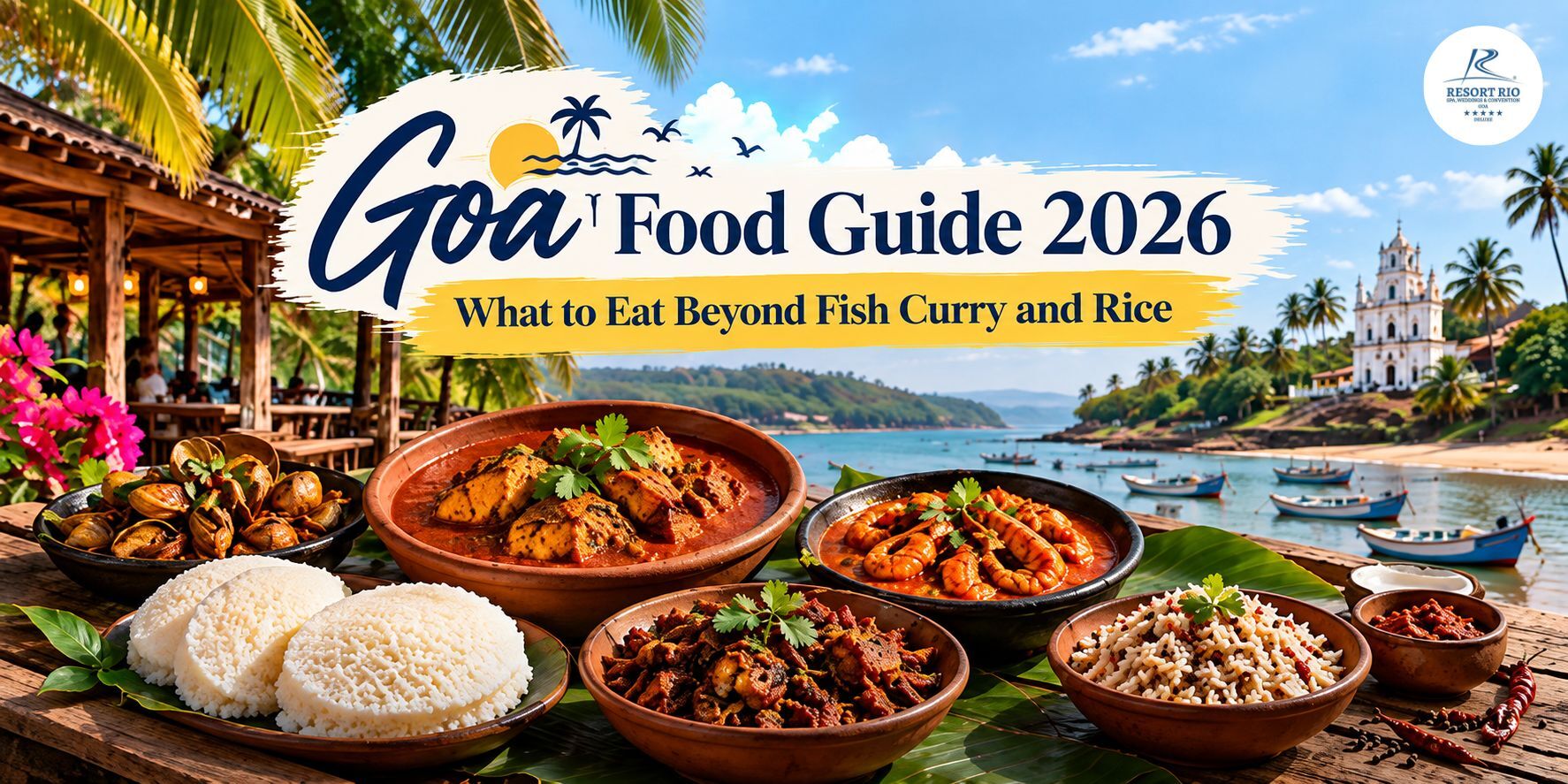
Goa cuisine is often reduced to fish curry and rice, but that misses a large part of the state’s culinary heritage. Goan cooking changes across communities, and family kitchens. Coconut, kokum, tamarind, rice, local chillies, spices, vinegar, toddy, seafood, legumes, and seasonal produce all have important roles. Goa special food also includes pork dishes, steamed rice breads, and local drinks. This variety matters to a state that welcomed 10,802,410 tourist arrivals in 2025, including 10,284,608 domestic tourists and 517,802 foreign tourists, according to the Goa Economic Survey 2025–26, based on Department of Tourism data. Tourist arrivals were 3.78% higher than in 2024, making this the latest full-year government figure available for a 2026 guide.
With such a large visitor base, local cuisine remains an important part of Goa’s tourism offering, while tourism authorities continue to give attention to culinary heritage and regional food traditions. Goa local food is best understood through the ingredients and methods behind each dish, not through a single menu. This guide focuses on traditional dishes that help you understand what people in Goa actually cook and eat.
Goa Food in 2026: A Culinary Tradition Beyond Fish Curry and Rice
Goan cuisine brings together coastal ingredients, local produce, traditional cooking methods, and influences from different communities. The dishes below cover curries, meat preparations, seafood, vegetarian food, breads, sweets, and seasonal specialties. Together, they give you a clearer picture of the traditional food of Goa beyond its most familiar
1. Xacuti: A Spice-Heavy Goan Curry
Xacuti is one of the clearest examples of how Goan cooking builds flavour through roasting and grinding. Goa Tourism describes versions made with chicken, and mutton. The masala can contain 16 to 18 spices, along with roasted coconut and onion. In Pernem, a related preparation is known as shagoti.
The roasted coconut gives the gravy body. The spices create its deep aroma and heat. Recipes vary between communities, so the colour, and level of chilli can differ.
When ordering xacuti, check which meat or seafood is being used. That small detail can change the dish considerably.
Planning your October getaway? Make the most of Goa’s beaches, festivals and local experiences with a comfortable stay at Resort Rio.
2. Sorpotel With Sannas
Sorpotel is an Indo-Portuguese pork preparation. Goa Tourism notes that older forms used pork along with liver, and other cuts. Goan Christian cooks adapted the preparation to local tastes and added vinegar. Some versions also use feni.
Sorpotel is commonly eaten with sannas, soft steamed rice cakes. Goa Tourism notes that traditional sannas can use coconut toddy as a fermenting agent. Yeast is also used in quicker versions.
Sannas can also be made sweet, with sugar or a coconut-and-jaggery filling. Their soft texture works well with strongly seasoned gravies.
3. Vindaloo: Understand the Vinegar
Vindaloo is often described simply as a very hot curry. Its defining feature is more specific: vinegar and garlic are central to the preparation.
Goa Tourism links the name to Portuguese terms associated with wine vinegar and garlic. Goan versions commonly use pork, although chicken and mutton versions are also prepared.
A good vindaloo should have clear acidity alongside its heat. The sourness should not disappear beneath the chilli. This makes it quite different from a standard spicy gravy.
4. Cafreal: Green, Sharp and Aromatic
Chicken Cafreal uses a green paste made with ingredients such as coriander, and spices.
Government tourism material traces its broader roots to Portuguese colonial cooking in Africa before its adaptation in Goa.
Cafreal is generally served as a dry or semi-dry chicken preparation rather than a coconut-heavy curry. The green masala gives it a fresh, sharp character.
For food to try in Goa, Cafreal is useful because it shows a different side of Goan meat cooking from xacuti and vindaloo.
5. Ambot Tik and Kismur
Ambot Tik gets its name from two Konkani words: ambot, meaning sour or tangy, and tik, meaning hot or spicy. Goa Tourism says it is commonly prepared with fish, prawns, or calamari. Tamarind and vinegar provide the sour element. Unlike many Goan curries, it does not depend on coconut.
Kismur provides a different texture. It is a dry side dish made with dried prawns or fish, grated coconut, and seasonings. Versions can use dried mackerel, shark, kingfish, or shrimp.
Kismur is particularly useful for understanding how drying helped preserve seafood and concentrate its flavour.
6. Balchão: A Pickle-Like Seafood Preparation
Balchão is closer to a spicy pickle or relish than a conventional curry. It commonly uses seafood, dried chillies, onion, garlic, spices, and vinegar. Prawn versions are especially associated with Goan cooking. Because the mixture is concentrated, it is normally eaten in small amounts with rice or bread.
Balchão also shows why vinegar is so important in Goan cooking. It adds acidity while helping create the sharp, preserved character associated with the preparation.
7. Vegetarian Goan Food Deserves Space
Traditional food of Goa is not limited to seafood and meat. Khatkhatem is a vegetable stew that can include raw jackfruit, beetroot, beans, raw banana, colocasia, pumpkin, radish, sweet potato, and drumstick. Goa Tourism notes that it is prepared without oil or garlic, with grated coconut, turmeric, tefflam, and chilli providing flavour.
Alsanyache Tonak uses black-eyed beans and potatoes in a spice paste containing ingredients such as coriander, cinnamon, red chilli, pepper, star anise, cloves, and cumin.
Kaju Biyaam Tondak is another vegetarian preparation. It uses cashews in a coconut-based gravy with tamarind and spices. It is associated with Goan festive meals and gatherings.
These dishes show how much of Goan home cooking exists outside seafood.
8. Poi, Poie and Sanna: The Accompaniments Matter
Sanna is a steamed rice cake with a soft texture. It can be plain, mildly sweet, or served with meat dishes. Poi or poie is a round baked bread commonly eaten with curries. Incredible India lists sanna and poie among Goa’s traditional accompaniments.
When choosing food to try in Goa, do not treat the bread or rice accompaniment as an afterthought.
A coconut-rich curry with rice has a different texture from the same curry eaten with poi. Sanna adds another texture because it is soft, steamed, and slightly springy.
9. Bebinca and Other Goan Sweets
Bebinca is Goa’s best-known layered dessert. Traditional versions use egg yolks, and spices. Each layer is cooked before the next is added, creating the dessert’s characteristic structure. Incredible India notes that versions can contain seven to 17 or more layers.
Patoleo is another important sweet. Rice paste is spread over turmeric leaves and filled with coconut, and cinnamon before steaming. Goa Tourism notes its strong association with the monsoon.
Perad, also called guava cheese, is made from guava. It can be eaten as a spread or dessert. Alle Belle is a soft Goan pancake filled with coconut and jaggery.
These sweets are useful examples of how rice, and eggs appear outside the main meal.
10. Seasonal Foods: Goa Changes With the Calendar
Seasonality matters in Goa. During summer, cashews and mangoes become prominent. Goa Tourism notes that cashew fruit is used in local preparations and that mancurad is a notable Goan mango variety. Small green mangoes are also used for pickles.
The monsoon changes seafood availability. Goa Tourism notes that fishing is banned during the monsoon season, increasing the importance of preserved seafood such as dried mackerel and dried prawns. Some fresh seafood, including crabs and mussels, can still be available.
This is why Goa famous food should not be treated as a fixed list. What appears in a home kitchen can change with weather, harvests, festivals, and community traditions.
Still deciding where to stay? Compare your travel plans, preferred beaches, and daily activities to choose the area that suits your Goa getaway best.
What Should You Order First?
For a broad introduction to food to eat in Goa, build one meal around a Goan curry, steamed rice or sanna, a dry seafood side such as kismur, and sol kadhi. Then try one meat preparation such as sorpotel, vindaloo, or Cafreal on another meal. Finish with bebinca or patoleo.
For vegetarians, start with khatkhatem, alsanyache tonak, kaju biyaam tondak, seasonal vegetable preparations, and a Goan sweet. This gives you a wider picture of Goan cuisine than ordering only the most familiar dishes.
Drinks Worth Knowing
Goa special food also includes drinks that are closely connected with local ingredients. Sol kadhi is made with kokum and coconut and is commonly served after meals. Goa Tourism describes it as a drink often consumed after rice-based meals.
Urrak comes from an early stage of cashew-fruit distillation. Goa Tourism states that it is mainly available during summer and is less alcoholic than feni. Feni comes from later distillation and can be made from cashew or coconut sources. Alcoholic drinks should be consumed only where legal and in moderation.
How to Eat Like a Careful Visitor
- Ask what meat or seafood is used in a dish before ordering.
- Check whether the preparation is traditionally made with coconut, vinegar, kokum, or tamarind.
- Look for seasonal dishes rather than expecting every preparation throughout the year.
- Try the accompaniments. Sanna, and sol kadhi are part of the meal structure.
- Respect dietary and religious differences. Goa’s cuisine has developed across Hindu, Christian, and other communities.
- Do not assume every dish called “Goan” follows one fixed recipe. Family and community variations are common.
Conclusion
Goa local food makes sense when you look at ingredients, preservation, fermentation, seasonality, and community traditions together.
Coconut and rice connect many dishes. Kokum, and dried seafood create different flavour profiles. Preservation also matters. Drying seafood, fermenting rice preparations, and using acidic ingredients allowed traditional cooks to work with ingredients across seasons.
Goa famous food deserves attention. But, the less familiar dishes can tell you just as much about the state. Khatkhatem shows vegetable cooking. Kismur shows seafood preservation. Sanna shows fermentation. Bebinca shows layered baking. Balchão shows how vinegar and preserved seafood can shape a preparation.
That is why the must try food in Goa list should be wider than fish curry and rice. Start with the classics, then add one seasonal, vegetarian, bread-based, and sweet preparation. Resort Rio can be one base for your stay while you plan your food stops around Goa.
